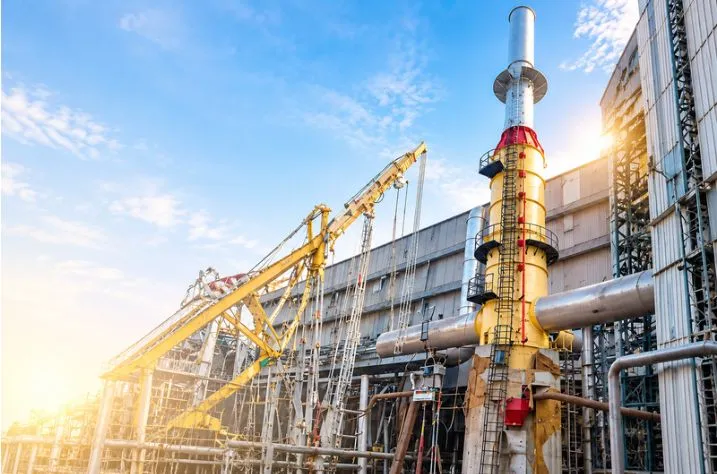
There will always be some form of exhaust gas from any industry process that will include dust, smoke, fumes, acid gases, chemical vapors, and many more types of airborne pollutants.
Scrubber system is designed by skilled scrubber system manufacturers in a way that it comes into contact with the polluted gas using a scrubbing liquid whereby the pollutants are removed or neutralized.
How Wet Scrubber Manufacturers in Chennai Approach Industrial Exhaust Treatment
The wet scrubber is a pollution control system in which water or other liquid chemicals are used to clean up pollutants in gases. While in dry filters there is no direct interaction between the pollutant and the liquid used to cleanse it, in wet scrubbers there is direct interaction.
This is because when the gas enters the wet scrubber system, the pollutants become involved in the process through ways such as absorption, impaction, interception and diffusion. Depending on the nature of the pollutant and the wet scrubber employed, the system enables removal of contaminants from the gas to the liquid phase.
It is necessary for people who are looking for solutions as wet scrubber manufacturers in Chennai to understand the process as different industries require different exhaust gases to be cleaned
Step 1: Contaminated Exhaust Gas Enters the Scrubber
The process starts when the polluted air or exhaust gas is fed into the wet scrubber through the inlet. The gas may include particulate matter, fumes, smoke, and/or other forms of gases that are produced as pollution during any kind of industrial activities.
The design of the inlet will play a vital part in the movement of the gas inside the equipment. In some designs of wet scrubbers, the tangential gas inlet is used for the creation of a rotating motion or centrifugal motion.
It is very important for engineers to know the characteristics of the exhaust before selecting any kind of equipment.
Step 2: The Gas Comes into Contact with Scrubbing Liquid
After the polluted gas has entered the equipment, it interacts with water or some other chemical liquid used for scrubbing. The fluid could be distributed in the scrubber using the spray nozzles and other distribution systems.
Depending on the design of the scrubber, there could be several ways of interaction between the liquid and contaminants:
- Absorption: specific gaseous pollutants dissolve in the scrubbing liquid from the exhaust gases stream.
- Impaction: dust particles bump into the liquid droplets and get caught by them.
- Interception: Particles moving within the gas stream come into contact with the liquid surface.
- Diffusion: small particles move towards liquid droplets and may be caught by them.
The proper way to do it depends on the nature of the pollutants and the equipment itself. That is why the scrubber system manufacturers choose the proper design according to real exhaust.
Step 3: Pollutants Are Captured in the Liquid
As there is an interaction between the gas and the liquid phase, contamination moves from the gas to the scrubbing liquid. Dust, smoke, and even fumes can become trapped in liquid droplets, whereas water-soluble gases and chemicals can get dissolved in the liquid.
It is important to determine which scrubbing liquid will be used, as in some cases it may be water, while in other instances it is a specially formulated chemical solution that helps to neutralise or absorb the contaminant.
Step 4: Contaminated Liquid Is Separated from the Gas
When the pollutants have been captured by the system, the gas contains liquid droplets that hold the pollutants. It is necessary to separate these liquid droplets from the purified gas before its discharge from the equipment.
This is accomplished using a mist separator. It helps in the separation of liquid droplets from the gas, thus preventing excessive carryover of liquid.
The separated liquid can contain the captured dust and other pollutants and will be collected separately, while the purified gas will proceed to the discharge point.
Step 5: Scrubbing Liquid Is Collected and Recirculated
It should be noted that the cleaning solution is not always used once through the equipment. Thus, in the case of the Indofan wet scrubber, the solution can be gathered in a recirculating tank and returned to the system for further use.
Such a configuration helps to control the liquid usage while operating. Nevertheless, the gathered liquid may be contaminated already, and, therefore, the state and proper handling of it should be taken into account when designing the system.
Step 6: Treated Gas Is Discharged
After the liquid droplets containing contaminants are separated, the gas leaves the scrubber. It is aimed at reducing the pollution of the exhaust gases and making the process of treating emissions better.
The efficiency of the process depends on the kind of pollutants treated and the conditions of the operation and design of the scrubber. Thus, the process needs to be designed depending on the treatment level and process features.
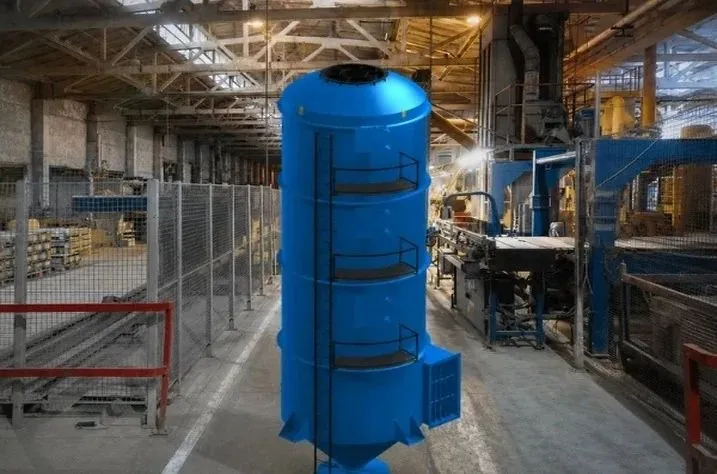
How Scrubber System Manufacturers Select the Right Wet Scrubber Design
An understanding of how the process works is one aspect to be considered in choosing a system that is appropriate. Two plants may have the same production machinery but produce exhaust gas with different amounts of pollutants in them at various temperatures and flow rates.
A dependable wet scrubber manufacturer in India will first evaluate these conditions before deciding on the equipment type.
The following aspects must be considered.
Pollutant Type and Concentration
First and foremost, it is important to find out what is to be filtered out. Effective dust removal requires efficient particle-liquid contact, and acid gases and chemical vapors may necessitate absorption technology.
Wet scrubber products offered by Indofan address dust, smoke, fumes, acid gases, alkali vapors, odor, chemical vapors, and VOCs. The process technology should be compatible with the characteristics of the emissions.
Gas Flow Rate and Operating Temperature
The amount of exhaust gases being treated will determine the size and design of the scrubber. The operating temperature will play an important role because it may affect the nature of the pollutants.
The effectiveness of the system will not be achieved if the system is not compatible with the gas flow rate. These variables need to be taken into account when designing the system.
Pressure Drop and Liquid Consumption
Pressure drop is another factor that plays an important role in influencing the amount of energy required to transport the gas in the system. The amount of liquid used will have an impact on the operating criteria.
Scrubber Configuration and Construction Material
Diverse wet scrubber designs exist to meet different requirements. The product line provided by Indofan consists of centrifugal wet scrubbers, vane wet scrubbers, impingement wet scrubbers, dynamic fan scrubbers, and multi-venturi wet scrubbers.
The material to be used is also very important, especially if the exhaust contains corrosive components. Construction materials that can be used include FRP, polypropylene (PP), PVC, HDPE, and stainless steel.
Industries That Use Wet Scrubber Systems
Industrial wet scrubber systems have wide-ranging applications within a number of different sectors where industrial exhaust is to be treated. Typical areas of use include:
- Steel mills and foundries: Where dust, smoke, and process fumes are to be controlled.
- Cement plants: Where exhaust with dust content is to be treated.
- Chemical industries: To control chemical vapors and emissions.
- Power plants: To treat industrial exhaust.
- Process industries: If the exhaust dictates that wet scrubbers should be used.
The specific machinery chosen would depend on the process and pollutants.
Why Engineering Evaluation Matters
Making a choice of a scrubber on the basis of its general capacity or looks can be quite misleading since many other operational parameters are needed to be taken into account while evaluating a scrubber system.
INDOFAN offers wet scrubber systems along with services related to process evaluation, 3D CAD design, fabrication, erection, commissioning, and performance testing. The engineering philosophy adopted by INDOFAN is geared towards making a choice of equipment which suits the requirements of the application.
While industries looking for a comparison of wet scrubber manufacturers in chennai or looking at the services of a wet scrubber manufacturer in india, these operational factors are more relevant than product choice alone.
Choosing a Wet Scrubber That Fits Your Process
The working of an industrial wet scrubber involves a sequence of steps which include: entry of the contaminated gas into the scrubber, contact of the contaminated gas with the scrubbing liquid, transfer of pollutants to the scrubbing liquid, passage through the droplet separation process and finally discharge of the treated gas. Liquid Collection and Recirculation processes facilitate the operation of the equipment.
INDOFAN designs industrial wet scrubbers and air pollution control systems in line with varying process requirements. In case your facility requires dust, fume, smoke and gaseous pollution control systems, provide your exhaust specifications and applications details to the INDOFAN engineers for discussion about your needs. Consult the right scrubber system manufacturers in order to select the right system for your industrial exhaust treatment.

Indofan Engineering Team
Engineers with over three decades of experience designing fans, blowers and air pollution control systems for process industries.
Planning a dust collection system?
Share your furnace details and we will size the system with you.